
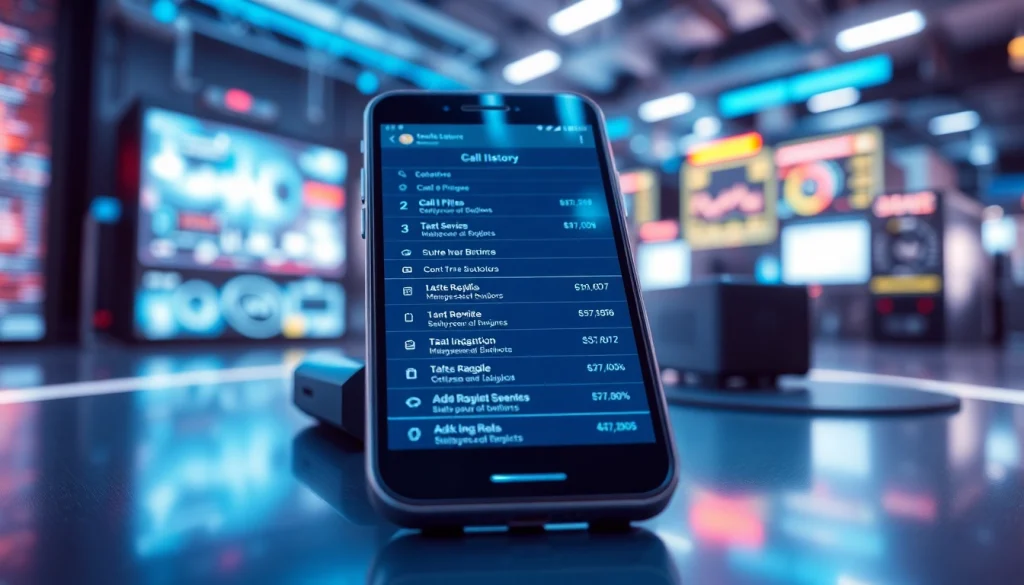

Understanding Call History Checkers
What is a Call History Checker?
A call history checker is a software tool designed to access and analyze call records from smartphones and other devices. This utility can significantly enhance communication management by providing insights into call patterns, identifying frequent contacts, and offering a clear view of who communicates with whom, when, and how often.
For both personal and professional use, these tools help users to monitor and track call history comprehensively. Not only do they allow users to retrieve specific communication instances, but they also facilitate data analysis to improve overall communication strategies and efficiency.
How Call History Checkers Work
At their core, call history checkers function by extracting call logs from a device’s operating system or telecommunication networks. This might involve accessing data through APIs for mobile devices, utilizing cloud storage for backups, or tapping into direct device storage for retrieval. Once the call logs are accessed, the software organizes and presents this information in a user-friendly format, often with graphical representations, such as charts or dashboards, making analysis straightforward.
Many call history checkers also offer additional features like call recording, contact management, and even the capability to categorize calls (e.g., personal, business-related). Thus, they serve dual purposes: data retrieval and intuitive analysis.
Benefits of Using a Call History Checker
The benefits of implementing a call history checker can be substantial. First, they provide better visibility into communication habits and trends. Users can identify peak calling times, frequently contacted numbers, and even missed calls that warrant follow-up. This transparency can improve responsiveness and outreach strategies.
Furthermore, call history checkers assist in optimizing resources—whether it be ensuring that team members are available during critical hours or identifying opportunities for better communication practices within organization structures. Additionally, for businesses, they offer insights that can guide customer relationship management, improving client interactions and satisfaction.
Key Features of Call History Checkers
Detailed Call Tracking
Detailed call tracking is a foundational feature of call history checkers. It encompasses logging dates, times, durations, and the nature (incoming, outgoing, missed) of each call. More advanced features may include GPS location tracking during the calls and the categorization of calls based on user-defined tags, like work-related or personal contacts. This depth of insight allows users to analyze communication at a granular level, ultimately leading to informed decision-making.
User-Friendly Interface
Another vital aspect is the user-friendly interface. A well-designed interface can simplify complex data sets and ensure users can navigate and analyze their call logs effectively. Many call history checkers come with dashboards that visualize data trends, making it more accessible for users to interpret their call history. If users find the interface challenging, they are less likely to utilize the tool to its fullest potential.
Data Privacy and Security
In a world increasingly concerned with data privacy, ensuring that a call history checker has stringent security measures is essential. This includes encryption of call data, secure access protocols, and compliance with data protection regulations. Users should feel confident that their personal and sensitive information is protected against unauthorized access and breaches.
How to Choose the Right Call History Checker
Assessing Your Needs
The first step in choosing the right call history checker is to assess your specific needs. Are you an individual wanting to manage personal communications better, or a business looking to enhance customer interactions? Understanding your usage requirements will help in selecting a tool tailored to your situation.
Comparative Analysis of Key Features
Once you have established your needs, conduct a comparative analysis of various call history checkers available in the market. Focus on features that matter most to you—these may include detailed statistics, ability to handle multiple accounts, software integration capabilities, and ease of data export. Create a feature matrix to evaluate each option systematically against your criteria.
Price vs. Value Considerations
Pricing can vary widely among different call history checkers. It’s essential to weigh the cost against the value offered. Look for tools that provide a trial period, allowing you to test functionality without commitment. Determine whether the features offered are worth the investment and if they align with your business or personal communication goals.
Implementing a Call History Checker
Getting Started: Setup Steps
Once you’ve chosen the ideal call history checker, the next step is implementation. This typically involves downloading and installing the application on your device or accessing the tool via a web portal. Follow the setup instructions carefully; many tools will require linking to your phone account or cloud service for data access. It’s advisable to walk through each setup option methodically to avoid missing critical configuration settings.
Integrating with Existing Systems
For businesses, integrating the call history checker with existing customer relationship management (CRM) or communication systems can enhance overall functionality. Look for tools that offer APIs or direct integrations with your current software. Setting this up allows for seamless data flow between systems, facilitating a comprehensive view of communication history across platforms.
Common Challenges and Solutions
While implementing a call history checker, users may face several common challenges, including data syncing issues, user resistance, or difficulties with software integration. Troubleshooting these should start with thorough documentation and support provided by the tool developer. User training sessions can also alleviate resistance, emphasizing the benefits the tool offers to streamline communication.
Measuring Success with Call History Checkers
Key Performance Metrics to Track
After implementation, measuring the success of a call history checker involves tracking relevant performance metrics. Key metrics might include call volume, average duration of calls, response times, and missed call rates. Analyzing this data regularly can highlight successful communication strategies and areas needing improvement.
Evaluating Impact on Communication
Evaluating the impact of the call history checker on communication efforts can be done through qualitative and quantitative analyses. Collect feedback from users based on usability and the perceived improvement in communication effectiveness. Also, consider changes in customer satisfaction scores and response rates as indicators of successful communication enhancements attributable to the tool.
Future Trends in Call History Analysis
The future of call history checkers will likely involve greater integration with artificial intelligence and machine learning technologies. Predictive analytics that forecast communication trends based on historical data could become a vital feature, allowing users to make proactive adjustments to their communication strategies.
Frequently Asked Questions
1. What is the primary function of a call history checker?
The primary function of a call history checker is to log and analyze incoming and outgoing calls, providing insights into call patterns and communication efficiency.
2. Is a call history checker secure?
Yes, reputable call history checkers implement encryption and adhere to privacy regulations to ensure the security of users’ data.
3. Can I integrate a call history checker with other software?
Many call history checkers offer integration capabilities with popular CRM systems and communication tools, enhancing overall communication management.
4. How often should I analyze call history data?
Regularly analyzing call history data, such as monthly or quarterly, helps identify trends and areas for improvement in communication strategies.
5. Are call history checkers easy to use?
Most call history checkers are designed with user-friendly interfaces, making data navigation and analysis straightforward for users at all skill levels.